Patio Restoration and Cleaning in Wallsend
Sandstone, limestone, porcelain, concrete or block paving - we clean patios properly in Wallsend, treating black spot lichen at the root, not the surface.
Why does a patio in Wallsend go black in patches even when the rest of it looks fine? Nine times out of ten it's black spot lichen, not dirt, and it favours the shaded, damp corners of a garden - under trees, behind fences, on the north-facing side of the house.
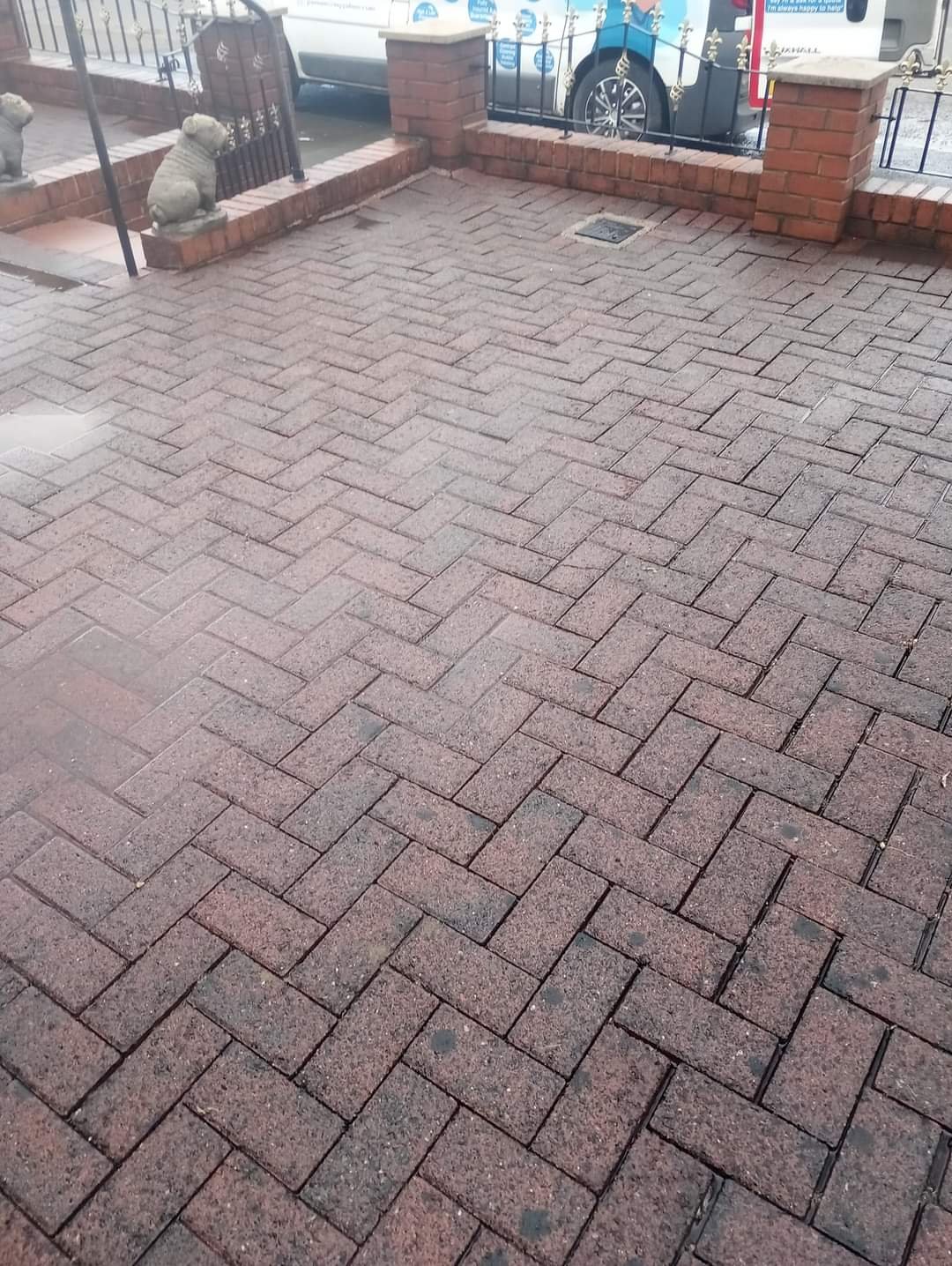
Whether it's a small courtyard patio behind a terrace, a large sandstone patio on a newer estate, or a block-paved driveway-turned-patio, the cleaning approach in Wallsend starts with the same question - what's it actually made of, and how bad is the black spot lichen.
The idea that a pressure washer alone will sort a lichen-covered patio is one of the most common misunderstandings we come across in Wallsend. Blasting black spot lichen off the surface just spreads live spores across the rest of the stone and into the joints - it looks clean for a few weeks, then comes back worse.
Homeowners
New Homeowners Inheriting an Old Patio
Moving into a property with a patio you didn't lay yourself often means inheriting someone else's neglect - years of black spot lichen, unknown pointing condition, or a material you're not sure how to look after. We'll tell you honestly what it's made of and what it needs.
That includes flagging anything beyond cleaning, like joints that need re-pointing, before we start, so you're not surprised by an issue a wash uncovers rather than causes.
Exposed and High-Ground Properties
Properties on higher, more exposed ground around Wallsend catch more wind-driven rain, which keeps stone surfaces wetter for longer even without direct shade. That constant dampness is enough on its own to encourage green algae and black spot lichen without any tree cover involved.
Wind exposure also means more airborne debris and grit settling into joints and pores, so a clean here often needs a bit more attention to the pointing and gaps between flags, not just the flat surface.
Steps for a Heavily Overgrown Patio
- 1
Clear loose debris
Moss, leaves and loose organic matter are cleared by hand first so treatment can reach the stone directly.
- 2
Strength-matched biocide application
On badly affected patios we use a stronger treatment mix, adjusted to the material so sandstone and limestone aren't over-treated.
- 3
Extended dwell time
Heavier growth needs longer for the biocide to work through fully - we don't rush this stage.
- 4
First pass clean
An initial wash lifts the bulk of the dead growth, often revealing the true condition of the stone and joints underneath.
- 5
Joint and edge detail work
Gaps between flags or block paving are cleaned individually where growth has been established for years.
- 6
Second rinse and inspection
A final rinse and a full inspection confirms nothing's been missed and flags any re-pointing that's now worth doing.
How We Clean Your Patio, Step by Step
We start with a walk round to check the material, the level of black spot lichen or algae, and anything unusual like loose pointing or an uneven flag. Then we apply a biocide treatment to any lichen, moss or algae and leave it to work - this is the step that actually kills the growth rather than just knocking it back.
Once the treatment has done its job we clean with steam or low-pressure washing depending on the surface, working the joints as well as the flag faces. Block paving usually gets re-sanding advice if the jointing sand has washed out, and we finish with a rinse and a check over before we leave.
Porcelain Paving
- Porcelain is dense, low-porosity and generally the most resilient of the common patio materials, so it can usually take a firmer clean without surface damage. Black spot lichen tends to sit more on top of porcelain than embedded within it, which makes treatment slightly more straightforward.
- The joints between porcelain slabs are still worth checking, though - growth often establishes in the pointing before it shows on the tile faces.
How Far We Travel
We're based in Washington, and Wallsend is around 6.3 miles north of us - well within the area we cover regularly, so there's no long-distance call-out premium to factor into your quote.
Being a regular working area rather than an occasional trip means we can usually offer more flexible scheduling here than somewhere at the edge of our patch.
Cost Per Square Metre
For larger or irregular areas it's often easier to think per square metre rather than a flat fee. Porous stone needing biocide treatment generally sits toward the higher end, while denser materials in good condition sit lower.
Nearest Towns We Work In
Wallsend sits close to Walker, Hebburn and Heaton, all areas we cover as part of our normal working week rather than as an exception.
That proximity means scheduling is usually flexible, and we can often offer a nearby time slot if your preferred date is booked up.
Patio Cleaning in Wallsend — common questions
Assessment, biocide treatment, dwell time, clean, and a final check - that's the process behind every patio we work on in Wallsend, adjusted to whatever material you've got underfoot.
It's a bit slower than a straight pressure wash, but it's the difference between a patio that looks clean for a fortnight and one that stays that way.