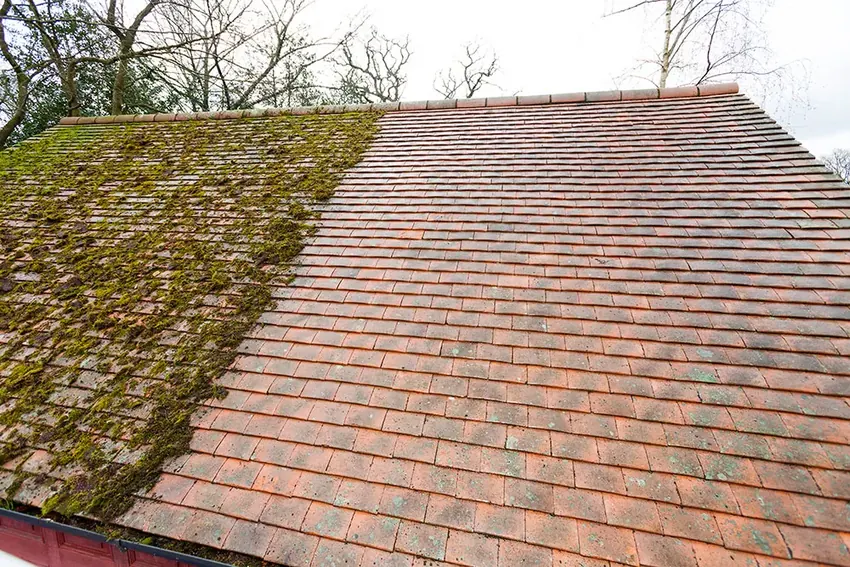
Pitched tiled roof with moss-covered tiles beside a cleared section

Roof moss removal: cleared, treated and the gutters left clear

A moss-first service that clears the heavy growth, treats the exposed tile and deals with what comes down.

What roof moss removal involves

Roof moss removal concentrates on the thick, springy growth that sits above the tile rather than treating every roof mark as the same problem. Moss holds rainwater against the surface, pushes into the laps between tiles and becomes heavier when it is saturated. In a gale, loose clumps can slide into the gutters and begin an obstruction just when the rainwater system is under the most pressure.

The service follows a clear sequence: expose the tile, choose a suitable cleaning method, treat the bare surface and collect what has fallen. A general roof clean may also address algae, lichen and staining across the roof. This page is for people whose main concern is established moss and the practical work needed to remove it at the root rather than simply improve the colour of the tiles.

Because a deep layer can shield what is underneath, spraying over it is not enough. The top growth may absorb the treatment before it reaches the tile. Removing the bulk first gives the later treatment direct contact with the surface where fragments could otherwise remain.

When moss needs attention

Look for raised green or grey cushions interrupting the tile lines, pieces appearing in the gutter or on the drive after wind, and a slope that stays damp long after the rest of the roof has dried. North-facing sides often receive less light, while branches overhead can leave a roof shaded and slow the movement of air. Those conditions help moss establish and affect how soon it may return.

The cool, damp months are when moss grows fastest. Water held within it can freeze and expand, and repeated frost can work tiles loose over time. Clearing growth before winter also reduces the amount available to shed during the first gales. If the property is being prepared for sale or valuation, taking away the uneven covering can lift its kerb appeal from the street.

For a closer explanation of the effects on the surface, read whether moss damages roof tiles. You can also ask us for help and advice even if you decide not to use us.

The removal process

  1. 1. Inspect the roof. We look at whether the tiles are concrete, clay or older and weathered, as well as the ridge, roof pitch, access and depth of growth. The proposed method is agreed before we quote.
  2. 2. Remove the heavy covering. Deep, saturated moss is scraped away so the cleaning stage and treatment can reach the tile rather than stopping at the upper layer.
  3. 3. Clean for the tile in front of us. Depending on its condition, that may mean a soft wash, a low pressure wash or hot steam. Steam suits roofs that would not take pressure well.
  4. 4. Treat the exposed surface. Biocide is applied after the bulk has gone. It continues working over the following weeks, while rain rinses away dead growth left on the surface.
  5. 5. Deal with the fallout. Moss is collected from the ground and guttering, and the work area is left tidy. The gutter run is checked and cleared so material washed down from above does not create the next problem. See our separate gutter vac clearing service for gutters that need attention beyond the roof work.
  6. 6. Report visible tile concerns. If the inspection reveals slipped, cracked or loose tiles, we point them out before winter. We are cleaners, not roofers, so repair work belongs with the appropriate trade.

Treatment choices and keeping moss back

The roof assessment decides whether soft washing, low pressure cleaning or hot steam is suitable; there is no single setting for every tile. The important distinction is that force is not used as a substitute for judgement. Older weathered tiles and roofs that would not take pressure well need an approach matched to their condition.

Biocide belongs after clearing, on the exposed surface. It needs the right dilution and application method to work without damaging nearby plants or running into drains. Our team is trained in biocide use. For more detail, compare moss scraping with chemical treatment and read how biocide roof treatment fits into the process.

Treatment slows regrowth, but roof conditions still decide when moss returns. Trimming back overhanging branches can improve light and airflow, while clear gutters reduce the damp debris sitting at the roof edge. Our guide to keeping roof moss from growing back brings those practical steps together.

Garages and outbuildings

Some older garage and outbuilding roofs may be asbestos cement. Our team is trained in asbestos awareness, so suspected sheeting is flagged during the inspection before any work is agreed. That is an awareness check, not a claim that we clean or remove asbestos. If you are unsure what the roof is made from, mention it when you contact us.

Why choose Annual Cleaning Solutions

  • Fully insured for the exterior cleaning work we carry out.
  • The team is trained in biocide use and asbestos awareness.
  • The roof and tile type are assessed, and the method is agreed before quoting.
  • Fallen moss is collected, including material in the guttering and on the ground.
  • Roof moss removal is available for homes and commercial premises across the North East.
  • We look after you and your property, and we are happy to give help and advice even if you do not use us.

Roof moss removal questions

Ask for a roof moss removal quote

We do not publish roof moss removal prices because the roof size and pitch, tile type, depth of moss, access and whether treatment is wanted all change the job. Read our roof moss removal cost guide, then tell us what you can see on your roof.

Call 07501060609