
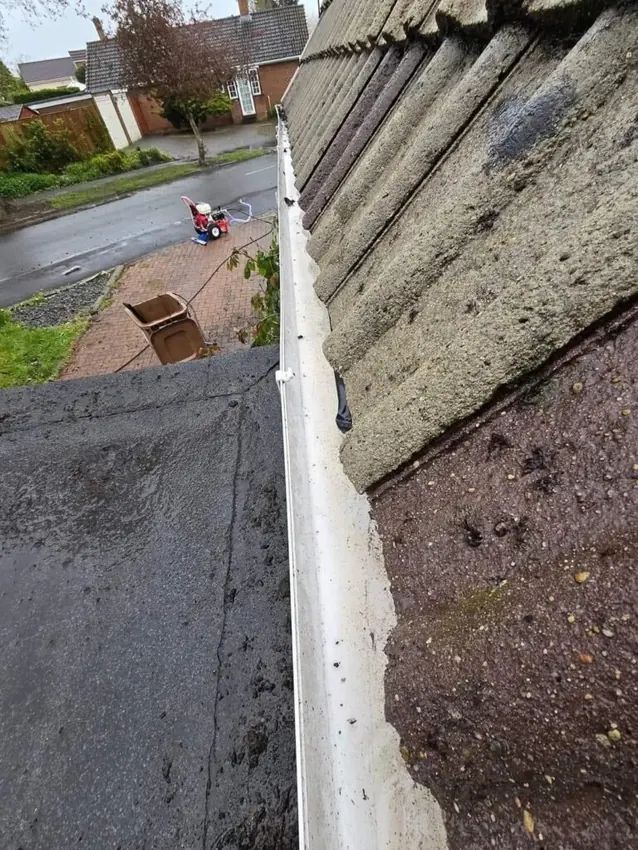
Gutter cleared of plants and debris beside corrugated roof tiles

Block paving and patio sealing

Paving cleaned, joints refilled and a protective coat applied, so a clean drive or patio stays that way for longer.

Why seal block paving or a patio?

A freshly cleaned driveway looks its best for a short while, then the weather starts working on it again. Rain washes jointing sand down between the blocks, weed seeds settle in the gaps and algae creeps back across the shaded corners. A sealer is a protective coat that slows all of that down.

Sealing binds the top of the sand in each joint so it is less likely to wash out or be lifted by a sweeper, and it gives the surface a skin that sheds water and dirt instead of soaking them up. Many owners also like the way it brings back the colour of faded blocks and slabs.

It is not a cure for paving that is broken, sinking or rocking underfoot. Sealing protects a surface that is basically sound. If blocks have dropped or slabs have cracked, that needs a groundworker first, and we will say so rather than seal over the fault.

Cleaning comes first

A sealer locks in whatever is on the surface when it goes down, so the paving has to be properly clean beforehand. Moss, algae, weeds in the joints, oil spots and the grey film on older blocks all need lifting first. That is why sealing sits at the end of our driveway cleaning and patio cleaning work rather than being offered on its own.

The clean uses a pressure and nozzle matched to the material, and a treatment kills off remaining growth. Old sand and organic matter come out of the joints at the same time, leaving them ready to be filled again.

Re-sanding the joints

Kiln-dried sand is brushed across block paving and worked down into every gap until the joints are full. That sand is what locks the blocks against each other, so a drive with empty joints moves more, grows more weeds and lets water get underneath. Our guide on how to re-sand block paving explains the job step by step.

Patios laid with mortar joints are different. Where pointing has cracked or dropped out we show you on the day, because a sealer will not hold loose mortar together.

Choosing a finish

Sealers come in different finishes, and the right one is mostly about how you want the paving to look. A wet-look product deepens the colour and adds a slight sheen, a little like the surface just after rain. A matt or natural product protects without changing the appearance much. The differences are set out in our wet look versus matt driveway sealer guide.

Some products suit concrete blocks, others natural stone, and a patio that only sees feet has different needs from a drive that carries a car every day. We recommend one once we have seen the material and how the area is used.

Drying and curing: what to expect on the day

Paving must be dry before any sealer goes on, so the forecast decides the timing. After cleaning and re-sanding the surface is left to dry, then the sealer is applied in even coats. If rain is due we would rather move the date, because sealing damp paving leaves a cloudy, patchy finish.

Once applied, the coat needs time to cure before it takes feet or tyres. That depends on the product, the temperature and the humidity, so we give you a clear answer on the day rather than a number in advance. Keep cars, bins and garden furniture off until we say it is ready.

When sealing isn't worth it

Sealing is a choice, not a requirement. If you are happy to pull the odd weed and have the paving cleaned now and then, an unsealed surface is perfectly fine. It also makes little sense on paving that is due to be lifted or relaid, or where the base has failed.

Some porous natural stones darken or change character under certain products. Where that is a risk we suggest a small test patch out of sight, or leaving the stone as it is. For what shapes the total, see block paving cleaning and sealing cost and driveway sealing cost.

How long a seal lasts and resealing

No sealer lasts for ever. Traffic, frost, sunlight and the product itself all wear it down, and a drive used daily loses its finish sooner than a quiet back patio. The signs are water no longer beading, sand starting to wash out again and the colour fading back. When to reseal your driveway covers those signs in more depth.

A reseal is usually lighter work than the first job, provided the paving has been looked after: a clean, a top-up of joint sand where needed and a fresh coat.

What a sealing visit covers

  • Cleaning the paving and treating remaining growth
  • Clearing old sand and debris from the joints
  • Re-sanding block paving with kiln-dried sand
  • Applying the chosen sealer in even coats
  • Advice on when the surface can be used again

Block paving and patio sealing questions

Driveway and block paving cleaning

Where we work

We travel up to 45 miles from our NE37 base in Washington, seven days a week, which takes in Sunderland, Newcastle, Gateshead, Durham and the towns listed on our areas page.

See the towns we cover

Want a quote for your property?

We look after you and your property, up to 45 miles from Washington.