
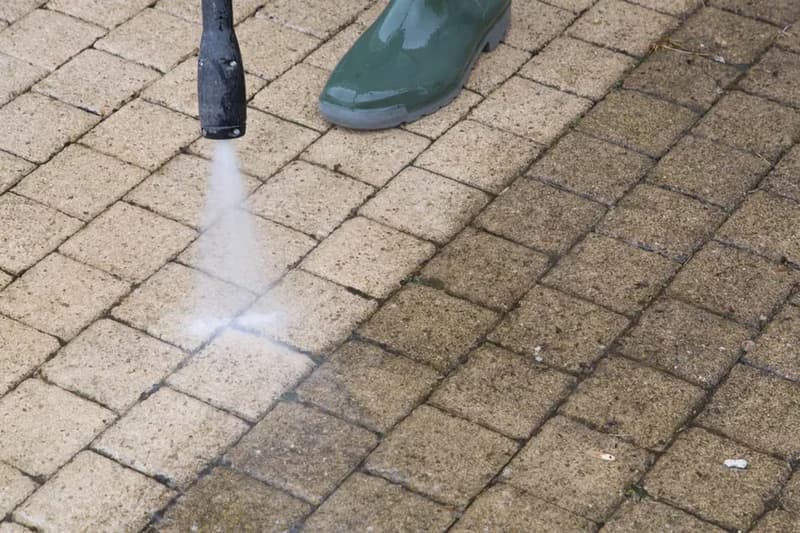
Pressure washer jet lifting dirt from block paving beside a worker's boots

Block paving cleaning across the North East

Weeds, moss, algae and old sand cleared from between the blocks, with fresh kiln-dried sand brushed back into every joint.

Why block paving needs its own kind of clean

Block paving is hundreds of small bricks held together by nothing more than the sand packed between them. That is what makes it look good and drain well, and it is also why it gets dirty differently from a concrete drive or a flagged patio. The joints fill with windblown soil, weed seeds root in them, moss spreads along the shaded edges and the surface of each block picks up a grey or green film.

Block paving cleaning deals with the joints as much as the faces. The surface is washed with a pressure and nozzle chosen for the blocks, the weeds and moss come out of the gaps along with the old, contaminated sand, and then the joints are refilled. Skip the refill and the blocks can start to shift.

This page covers cleaning the paving itself. If you want the whole driveway done, including edging, steps and other surfaces, see driveway cleaning. For a protective coat once the blocks are clean, see block paving and patio sealing. Paved patios are covered by patio cleaning, and the full range of hard-surface work sits under pressure washing.

Weeds, moss, oil and algae: what comes off

Weeds and grass in the joints are the most common complaint. Washing removes the growth and the soil it was rooted in, and a treatment is applied to the joints to discourage regrowth. We are trained in biocide use, so treatments are chosen and applied with care around lawns, borders and drains.

Moss and green algae sit on the block faces in shaded or damp spots, often near walls, under trees or where a downpipe discharges. They make the surface slippery as well as dull. Oil and fuel drips from parked cars soak into the blocks; washing lightens them, and stubborn marks can be treated separately, though deep, old oil stains may not disappear completely and we will be honest about that before we start.

Re-sanding the joints after cleaning

Once the joints are empty and the blocks have dried, kiln-dried sand is brushed back across the surface and worked down into every gap. Full joints lock the blocks against each other, stop them rocking and leave less room for weeds to take hold again.

Re-sanding is part of the clean rather than an optional extra, because washing paving without refilling the joints leaves it weaker than before. Sealing can follow if you want the sand held in place for longer, but it is your choice.

Block paving cleaning cost and prices

We do not publish a price list for block paving cleaning. What drives the cost is the area of paving, how much growth is in the joints, whether there are oil stains to treat, how much sand the joints will take and whether you want sealing afterwards. Access matters too: a front drive we can reach from the road is quicker than paving behind the house. Our block paving cleaning and sealing cost guide explains these factors in more depth, and the quote form on this page is the quickest way to get a figure for your paving.

Related reading: how to re-sand block paving and weeds growing between block paving.

Pressure set for the blocks

Pressure and nozzle are matched to the paving, so the faces are cleaned without scouring them.

Joints cleared

Weeds, moss and contaminated sand come out of the gaps, not just off the top.

Fresh sand brushed in

Kiln-dried sand refills every joint once the surface is dry.

Fully insured

We are fully insured, and trained in biocide use for joint treatments.

What block paving cleaning includes

  • Weeds and moss removed from the joints
  • Surface washed to lift algae and grime
  • Oil and fuel marks treated where possible
  • Treatment applied to discourage regrowth
  • Joints re-sanded with kiln-dried sand
  • Slurry swept up and the area left tidy

Signs your block paving needs cleaning

  • Weeds or grass growing in the gaps
  • Blocks that rock or sound hollow underfoot
  • Joints sunk below the top of the blocks
  • Slippery green patches in shaded corners
  • Dark rings where cars park
  • Colour that looks patchy or faded

How we clean block paving

  1. 1

    Look at the paving

    We check the joints, the type of block and any stains so you know what to expect.

  2. 2

    Wash the surface

    The blocks and joints are washed with a pressure suited to them.

  3. 3

    Treat stains and growth

    Oil marks and remaining growth are treated.

  4. 4

    Let it dry

    The joints need to be dry before sand will run into them.

  5. 5

    Re-sand

    Kiln-dried sand is brushed in until every joint is full.

Block paving cleaning questions

Cleaning the whole drive? See driveway cleaning

Where we work

We travel up to 45 miles from our NE37 base in Washington, seven days a week, which takes in Sunderland, Newcastle, Gateshead, Durham and the towns listed on our areas page.

See the towns we cover

Want a quote for your property?

We look after you and your property, up to 45 miles from Washington.