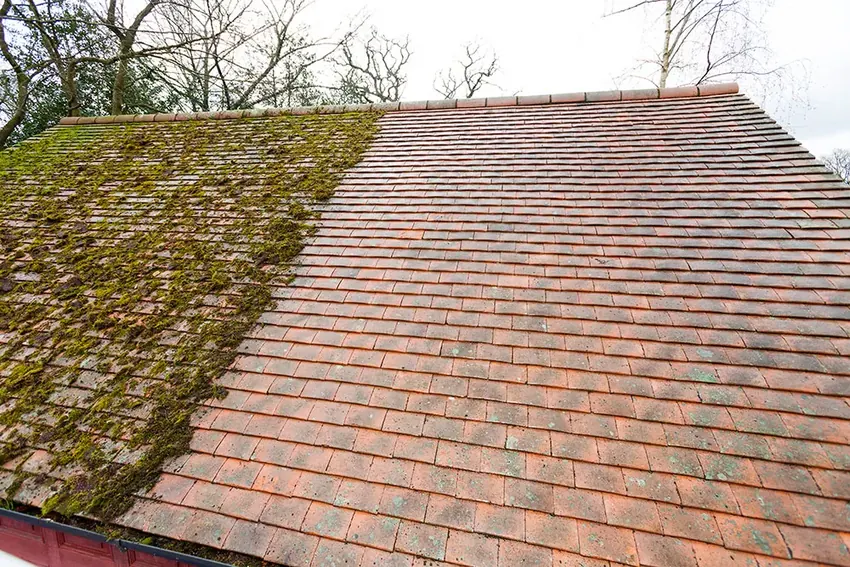
Durham has a wide spread of roofs in a small area: slate and old clay on the period houses around the city, concrete tiles on the post-war and newer estates, and plenty of homes under tall trees that keep their roofs damp and shaded. All of them grow moss, but they do not all want cleaning the same way.
Our roof cleaning always starts with a look at the roof. Heavy moss is scraped off by hand first, because no wash gets through a thick, wet layer. Then the surface is cleaned with a soft wash, a low pressure wash or hot steam, whichever suits the tiles. We never use high pressure on a roof.
Why the method changes from roof to roof
A sound concrete tile will take a low pressure wash. An older, weathered tile or a clay tile can be more fragile, and that is where hot steam or a soft wash comes in: they clean the surface without forcing water into it or wearing it away. Older roofs in the city often call for the gentler options.
Once the roof is clean, a treatment goes on to the bare surface to slow the moss coming back. It keeps working over the following weeks as rain rinses the dead growth away. How long a roof stays clear depends on its conditions, such as shade, a north-facing slope or overhanging trees, and we will be straight with you about that.
What happens to the moss
Moss that comes off the roof is collected up, including whatever drops into the gutters and onto paths and borders. Washed-down moss is the most common reason a gutter blocks after a roof clean, so we deal with it as part of the job rather than leaving it for the next downpour.
If you also want the gutters properly vacuumed and checked on camera, we can do that on the same visit. Our gutter cleaning in Durham page explains how that works.
Spotting problems while we are there
Working on a roof means we see it closely. If there are slipped, cracked or loose tiles, we will point them out before winter so you can get a roofer to look. We are cleaners, not roofers, and we will not do repairs or pretend to. Moss itself can work tiles loose over time, because it holds water against the tile and frost expands that water in the gaps.
Moss removal or a full roof clean?
If your main concern is thick moss, our roof moss removal page goes into the clearing and treatment in more detail. If the roof is more stained than mossy, with black or green algae and lichen across the tiles, our main roof cleaning page covers that. In practice many Durham roofs need a bit of both.
Durham is under nine miles from our base in Washington, and the city is one of the places we work most. Our Durham area page lists the other jobs we do there.
Conservatories and extensions below the roof
Many Durham houses have a conservatory or a single storey extension under the main roof. Debris from a roof clean can land on them, so tell us about them when you book. Fallen moss is cleared from them along with the paths and borders, rather than being left on a glass roof to wash into its gutter.
Getting a roof cleaned
Call 07501060609 or use the quote form. Telling us the type of house, roughly how bad the moss is and whether there is a conservatory or extension below the roof helps. We are fully insured, open seven days, and work for homeowners and commercial premises.
Questions about roof cleaning in Durham
My Durham house has an old slate or clay roof. Can it still be cleaned?
Yes, but gently. Older and more fragile roofs are where a soft wash or hot steam is used instead of low pressure, after the heavy moss has been scraped off.
Will you tell me if my roof needs repairs?
If we see slipped, cracked or loose tiles we point them out so you can get a roofer to look. We clean roofs; we do not repair them.
How long before the moss comes back on my roof?
It depends on the roof's conditions, such as shade, a north-facing slope or nearby trees. The treatment applied after cleaning slows regrowth.
Do you clear up the moss that falls off?
Yes. Moss is collected from the ground and from the gutters so it does not block them in the next rain.