
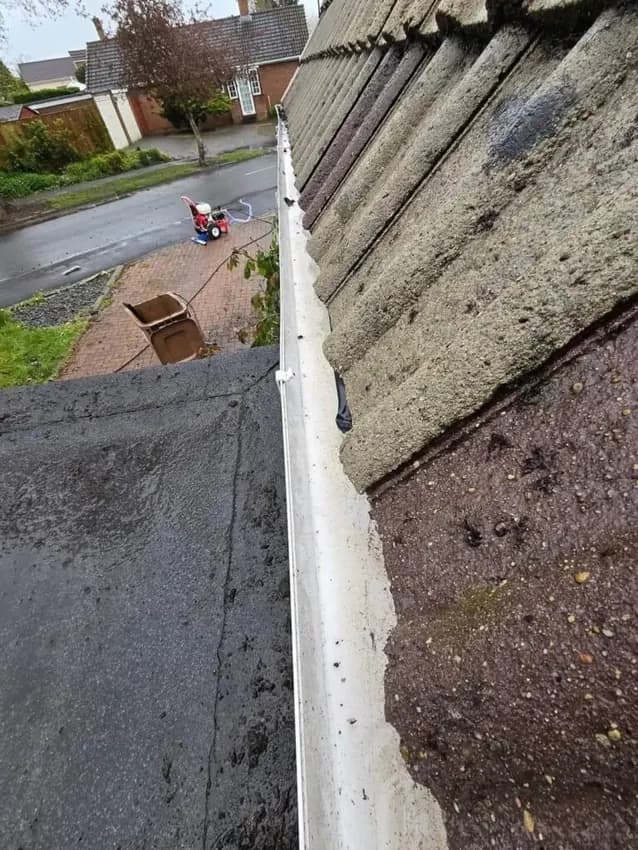
Gutter cleared of plants and debris beside corrugated roof tiles

Stone cleaning across the North East

Sandstone, natural stone and masonry cleaned with a method matched to the surface, from soft washing to low pressure steam.

Cleaning stone without damaging it

Natural stone changes character as it weathers. Sandstone darkens, algae greens the shaded faces, black spots appear where lichen takes hold, and moss fills the joints of walls and paths. Left alone it does no structural harm in most cases, but it hides the colour of the stone and makes paths slippery.

Stone cleaning brings the surface back without eroding it. The method depends on the stone: soft washing, where a dilute solution at low pressure kills the growth, suits most sandstone and masonry, while low pressure steam helps where heat releases stubborn soiling. High pressure is used sparingly, if at all, because a hard jet scars soft stone and blasts out mortar.

This page covers walls, paths, steps and features in natural stone. For house walls in brick, see brick and stone cleaning; for rendered finishes, see render cleaning; and for the gentlest steam method on delicate or historic masonry, see DOFF steam cleaning.

Sandstone and Indian sandstone cleaning

Sandstone is one of the most common stones we are asked about, from boundary walls to Indian sandstone patios. It is porous and relatively soft, which is why it stains so readily and why aggressive washing is a mistake: the jet opens the surface and the stone gets dirty faster afterwards.

Indian sandstone paths and patios usually carry a mix of green algae, black lichen spots and general grime. A treatment kills the growth at the root, washing lifts the dirt, and the black spots fade as the killed lichen releases over the following weeks. Our guides how to clean stone walls and how to clean Indian sandstone go deeper into each.

What drives stone cleaning cost

We do not publish stone cleaning prices, because the job is set by the surface in front of us: the type and condition of the stone, the area involved, how heavy the growth is, access and water supply, and whether the stone can take any pressure at all or needs a slower, gentler approach. Tell us what you have, or send a photo, and the quote will reflect the real job.

Timing matters too. Stone cleans best in a dry spell, when treatments can dwell without being rinsed off by rain and surfaces dry evenly afterwards. Spring and autumn are popular, but the work can be done whenever the forecast allows a dry window.

Soft washing first

Low pressure and cleaning solution kill growth at the root rather than blasting the surface.

Steam where it helps

Low pressure steam releases soiling that cold water leaves behind.

Growth killed, not skimmed

Algae and lichen are treated so the stone stays cleaner for longer.

Fully insured

We are fully insured and trained in biocide use for the treatments involved.

What stone cleaning includes

  • Method matched to the type and condition of the stone
  • Algae, moss and lichen treated at the root
  • Black spotting addressed with treatment and time
  • Gentle washing or steam to lift soiling
  • Care for mortar joints and surrounding planting

Signs your stonework needs cleaning

  • Green film on shaded faces
  • Black spots that will not scrub off
  • Moss in the joints of walls or paths
  • Slippery paths after rain
  • Stone that has darkened unevenly

Stone cleaning questions

Brick walls too? See brick and stone cleaning

Where we work

We travel up to 45 miles from our NE37 base in Washington, seven days a week, which takes in Sunderland, Newcastle, Gateshead, Durham and the towns listed on our areas page.

See the towns we cover

Want a quote for your property?

We look after you and your property, up to 45 miles from Washington.